Risk Radar According to FDPIC Annex A: Systematically Evaluating Privacy Risks
Annex A of the FDPIC guide describes a risk evaluation methodology that many SMEs don't know. How it works, when it's mandatory, and how to apply it for your website — without compliance theatre.
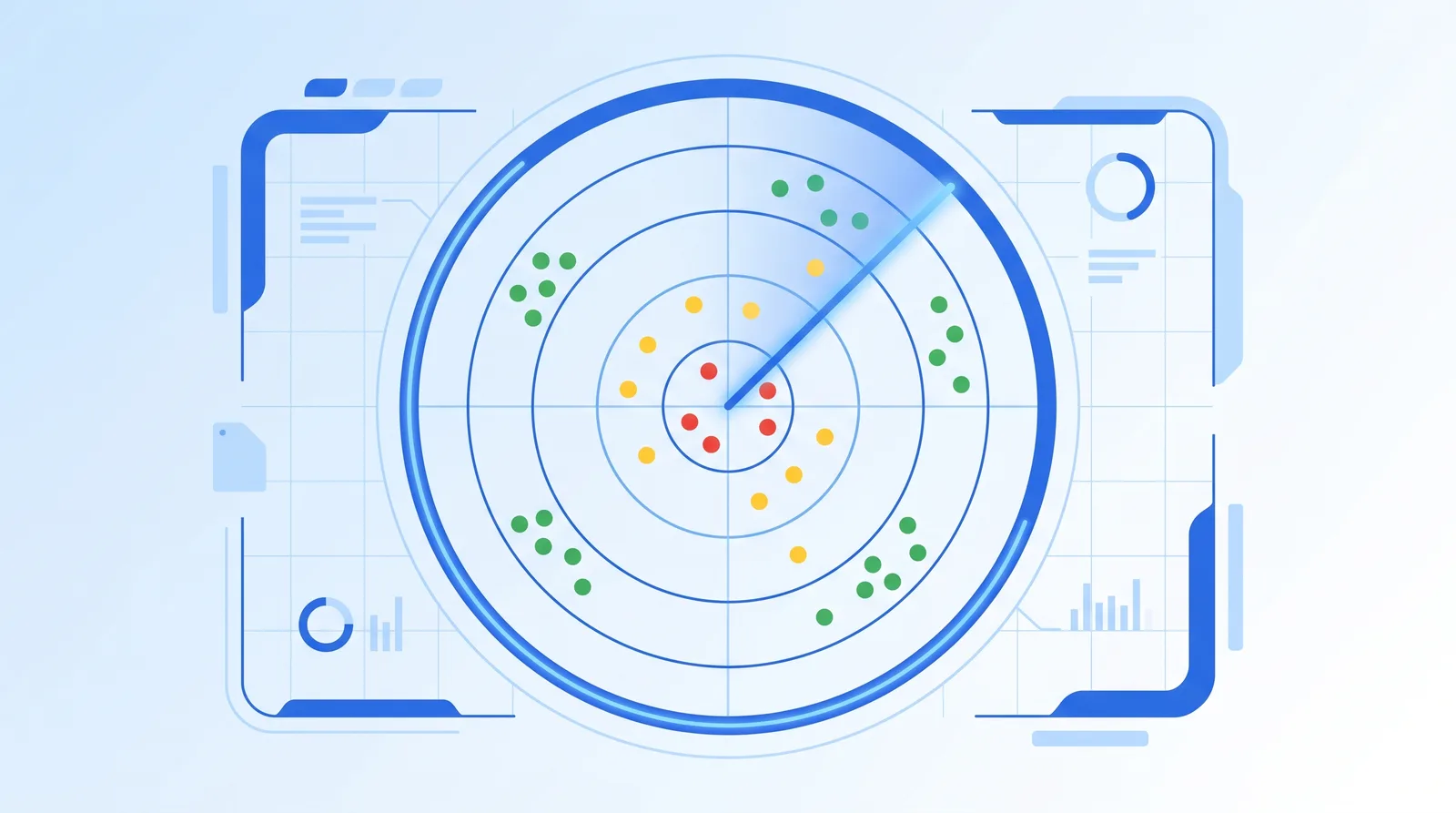
"Do we need a Data Protection Impact Assessment?" This question is one of the most common — and the answer is usually: "Probably not, but Annex A of the FDPIC guide helps to check this systematically." Annex A is the practical tool that doesn't play a major role in the FADP itself but is gold worth in everyday practice.
What Annex A delivers
The FDPIC has published an Annex A in its guide on Data Protection Impact Assessment (DPIA) describing a structured methodology for evaluating data protection risks. The method combines four dimensions into an overall score, providing an objective basis for the decision "DPIA yes or no."
Important: Annex A is not mandatory, but a recommendation. Anyone using it has a defendable risk assessment process. Anyone applying their own methods must be able to document them similarly structured.
The four risk dimensions
1. Severity of impact
How severe would the damage to a data subject be if something goes wrong? Typical scale:
- Low — minor effort to restore (e.g. newsletter spam)
- Medium — noticeable impact (e.g. unwanted advertising)
- High — substantial impact (e.g. unfair credit decision)
- Very high — irreparable (e.g. public disclosure of sensitive health data)
2. Probability
How likely does the damage occur? Scale:
- Very unlikely — e.g. with very strong security measures
- Unlikely — standard security, little attack surface
- Possible — average risk
- Likely — vulnerabilities known, mitigation unclear
- Very likely — no protective measures, high attack surface
3. Number of affected persons
How many people would be affected? Scale:
- Few (< 100)
- Medium (100-10,000)
- Many (> 10,000)
4. Special vulnerability
Are particularly vulnerable persons affected? (e.g. children, patients, employees with asymmetry to the processing entity)
- No — usual adult users
- Yes — children, patients, employees or persons in vulnerable situations
Calculating the risk score
The score is typically formed as multiplication or aggregation of the four dimensions. A simple model:
Risk = Impact × Probability × Number-Factor × Vulnerability-Factor
With:
- Impact: 1-4
- Probability: 1-5
- Number: 1 (few), 2 (medium), 3 (many)
- Vulnerability: 1 (no), 2 (yes)
Thresholds:
- Score 1-12: Low risk, no DPIA needed
- Score 13-30: Medium risk, DPIA recommended
- Score 31-120: High risk, DPIA mandatory
Example: SME web shop with standard marketing
Setup: Swiss web shop, ca. 5,000 monthly visitors, Google Analytics, Meta Pixel, newsletter via Brevo.
Impact: 1 (low) — in case of cookie tracking data leak, individual impact would be minor.
Probability: 2 (unlikely) — the tools are established providers with good security.
Number: 1 (few) — only a fraction is actively tracked per month.
Vulnerability: 1 (no) — standard users.
Score: 1 × 2 × 1 × 1 = 2 → Low risk, no DPIA needed.
Example: Online platform with profiling
Setup: SaaS platform, automatic tariff calculation based on user behaviour and demographic data, 50,000 users.
Impact: 3 (high) — wrong tariff determination can bring financial disadvantages.
Probability: 3 (possible) — algorithms can contain bias, wasn't tested.
Number: 3 (many) — over 10,000 persons.
Vulnerability: 1 (no) — business customers.
Score: 3 × 3 × 3 × 1 = 27 → Medium risk, DPIA recommended. Mandatory at higher probability.
When the FDPIC must be consulted
If the DPIA shows that risk cannot be sufficiently reduced, the FDPIC must be consulted in advance (Art. 23 FADP). In practice this is rarely the case — usually mitigations are found that adequately cushion the risk.
Possible mitigations:
- Data minimisation — collect less data
- Anonymisation/pseudonymisation — process data so no identification is possible
- Consent — explicit agreement as additional legitimation
- Transparency — inform data subjects and provide choice
- Security measures — encryption, access controls, logging
Aiara and the Risk Radar
The Risk Radar is part of the Aiara Privacy Suite and available as an integrated feature. Swiss SMEs can perform a quick evaluation per domain and per used tool — based on the four dimensions, with automatic recommendations for mitigations. Anyone using the Risk Radar regularly documents their risk assessment systematically and, in an FDPIC random check, can immediately present a justified evaluation.
Even without a tool: take Annex A seriously, do a written evaluation per relevant data processing operation, and document the result with date and responsible person. That can be done in half an hour.
Frequently Asked Questions
What is FDPIC Annex A?
Annex A of the FDPIC guide on Data Protection Impact Assessment describes a structured method for evaluating data processing risks. Specifically, four dimensions are considered: severity of impact, probability, number of affected persons and special vulnerability. The evaluation produces a risk score that decides whether a DPIA is mandatory.
When is a Data Protection Impact Assessment (DPIA) mandatory?
When a data processing brings high risk for personality or fundamental rights of data subjects. Classic examples: profiling with major impact (such as creditworthiness, tariffs), processing of sensitive data (health, religious beliefs), systematic surveillance of public areas.
Does a typical SME web shop need to do a DPIA?
If the website uses standard tracking (Google Analytics, Meta Pixel) and doesn't carry out high-risk processing, a DPIA is generally not mandatory. But as soon as profiling with major impact is involved (e.g. dynamic pricing based on user behaviour), it becomes relevant.
Who carries out the DPIA?
The controller themselves — typically the managing director or a delegated data protection officer. A data protection officer (internal or external) should be consulted. In case of uncertainty or high risk: consult the FDPIC.
How do you document a DPIA?
In writing, with clear description of processing, risks, mitigations and remaining risks. Ideally as a Word/PDF document with date and responsible person. In an FDPIC random check this documentation is gold worth — it shows you've thought through the risks.
Ready for clean cookie consent?
Aiara handles cookie banners, privacy policies and legal notices for your website — FADP and GDPR compliant.
Discover Aiara